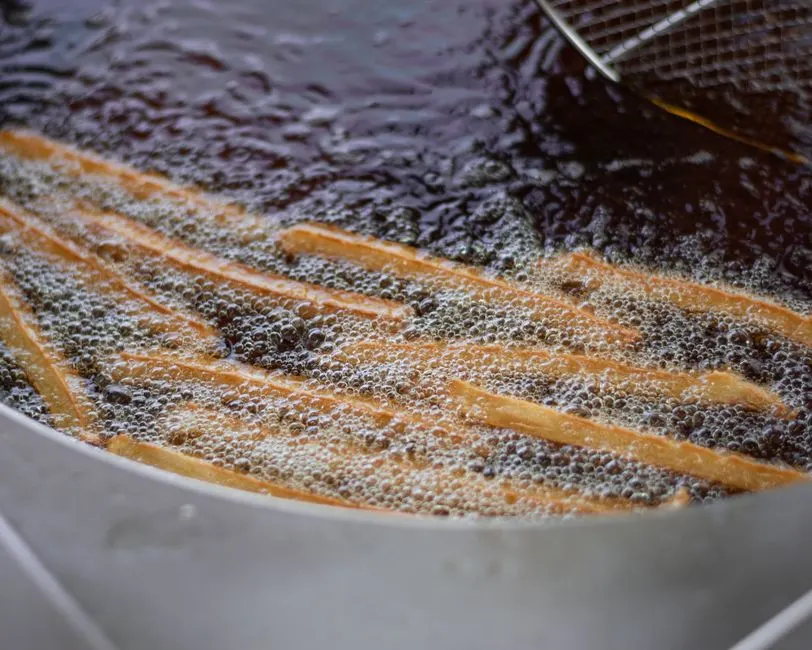
Grease trap cleaning for Claremont restaurants is the scheduled pumping, scraping, and hauling of the fats, oils, and grease (FOG) that collect in your interceptor before they reach the city sewer. If you run a kitchen in Claremont and you're asking whether you're compliant, the short answer is: you are compliant only if you can produce pumping records that match your grease trap's capacity and your kitchen's actual FOG output - and most restaurants here need service every 4 to 12 weeks, not once a year.
Below we walk through what the rules actually require, what 2026 pricing looks like for a Claremont kitchen, how often you should be pumping, and the mistakes that get restaurants cited or shut down mid-service.
What grease trap cleaning for Claremont restaurants actually involves
Grease trap cleaning for Claremont restaurants is a commercial plumbing service that removes accumulated FOG, solids, and wastewater from an interceptor and disposes of it through a permitted hauler, restoring the trap's ability to separate grease from the water leaving your kitchen. It is not the same job as snaking a kitchen line, and it is not something a dishwasher or prep cook can do with a bucket and a shop vac.
On a typical service visit we do six things:
- Measure the grease cap and solids layer so you have a documented baseline.
- Pump out the entire tank - grease, water, and sludge - not just the top layer.
- Scrape the walls and baffles where hardened grease hides.
- Check the inlet and outlet baffles for blockages or damage.
- Inspect the outlet side for carryover, which tells us the trap is undersized or being pumped too late.
- Refill with clean water and leave you a manifest with the date, volume, and disposal site.
That manifest is the document a health inspector or city pretreatment staff will ask for. If you can't produce it, you're out of compliance regardless of how clean the trap looks.
For kitchens that also fight slow floor sinks and prep sinks, we handle floor drain cleaning Claremont CA on the same visit so the trap and the drains downstream of it get addressed together instead of one at a time.
What are the grease trap compliance rules for Claremont restaurants?
Grease trap compliance rules for Claremont restaurants come from three layers stacked on top of each other: the California Plumbing Code, Los Angeles County Department of Public Health requirements for food facilities, and the City of Claremont's own sewer-use and FOG ordinance enforced through its pretreatment program. All three apply to you at once.
The practical requirements break down like this:
- An adequately sized interceptor. Most full-service kitchens need a trap rated for the fixtures discharging into it; a 1,000-gallon outdoor interceptor is common for a sit-down restaurant, while smaller cafés often run a 500-gallon unit or an under-sink trap. Undersized traps are the number-one cause of carryover citations.
- Scheduled pumping with records. You must be able to show pumping manifests, and the interval has to reflect actual FOG volume - the "25% rule" (pump when grease and solids together reach a quarter of the trap's depth) is the standard inspectors apply.
- No FOG to the sewer. Grease must not leave your property through the sewer lateral. Visible grease at the outlet or a grease-related backup downstream is a violation on its own.
- Proper disposal. Used cooking oil goes to a rendering service, not the trap and not the dumpster drain. Trap waste goes through a permitted hauler.
- Best management practices in the kitchen. Scraping plates before washing, no grease pouring down drains, and screens in sink drains are all things an inspector will look for.
Enforcement in Claremont is complaint-driven and inspection-driven. A grease blockage in the city main traced back to your lateral can trigger a notice to correct, a re-inspection fee, and in repeat cases a surcharge on your sewer bill. We've seen restaurants in Claremont Village get hit with this because the shared lines behind older buildings fill up faster than a single tenant expects.
How often should restaurants clean grease traps in Claremont?
Most Claremont restaurants should pump their grease trap every 4 to 12 weeks, with high-volume fryer kitchens at the short end and low-volume cafés or bakeries at the long end. The right interval is set by your trap size and your actual FOG output, not by a calendar someone hung on the wall.
Use these as starting points and adjust after two or three visits:
- Full-service restaurant, heavy fryer use: every 4 to 6 weeks.
- Fast-casual or takeout with a fryer: every 6 to 8 weeks.
- Café, bakery, coffee shop: every 8 to 12 weeks.
- Any kitchen with an undersized under-sink trap: every 2 to 4 weeks, or upgrade the trap.
The 25% rule is the one to remember. When the combined grease and solids layer reaches a quarter of the trap's liquid depth, separation efficiency drops sharply and grease starts carrying over to the outlet. On a 1,000-gallon interceptor that's roughly 250 gallons of accumulated FOG - which a busy Claremont kitchen can produce in under two months.
Seasonality matters here too. Late fall and winter are when we get the most calls about backed-up kitchen lines, because holiday catering volume spikes while pumping schedules stay on the summer cadence. If you're heading into December with a full house, pull your pumping forward rather than waiting for the scheduled date.
How much does grease trap cleaning cost for Claremont restaurants?
Restaurant grease trap cost in Claremont runs roughly $300 to $650 per pumping for a typical 500- to 1,000-gallon interceptor in 2026, with small under-sink traps at $150 to $275 and large or heavily loaded units at $700 and up. Disposal fees, access difficulty, and after-hours scheduling move the number more than anything else.
Here's what drives the price:
- Trap size and access. A ground-level outdoor interceptor with a clear lid is a straightforward pump. A trap under a prep sink, behind equipment, or in a tight back-of-house corner takes longer and costs more.
- Grease depth. A trap pumped on schedule is cheaper than one that's been let go - thick solids mean more time, more volume, and sometimes a second visit.
- Disposal and hauling. Trap waste has to go to a permitted disposal facility, and that tipping fee is baked into your invoice.
- Frequency. Scheduled service is cheaper per visit than emergency calls. A quarterly contract typically beats four one-off visits.
- Time of day. After-hours or pre-open service carries a premium, but for many restaurants it's worth it to avoid shutting down the kitchen during service.
Budget for it as a fixed operating cost, not a surprise. A full-service Claremont restaurant pumping every six weeks at roughly $450 a visit is looking at about $3,900 a year. Compare that to a single grease-related backup during dinner service - lost covers, emergency call-out, and possible sewer surcharge - and the scheduled number is the cheap one.
If your kitchen lines are already slow, the trap is only half the story. We also run commercial drain cleaning Claremont CA on the lines downstream of the trap to clear the grease film that builds up in the pipe itself.
Common mistakes we see in Claremont kitchens
The same handful of mistakes show up in Claremont kitchens over and over, and each one either costs you money or puts your compliance record at risk.
- Pumping only the top layer. Skimming grease off the top leaves the solids and sludge behind, and the trap stops working within weeks. A proper pump removes everything.
- No paper trail. A clean trap with no manifest is a citation waiting to happen. Keep every pumping record for at least three years.
- Treating the trap like a garbage disposal. Rice, pasta, coffee grounds, and paper towels sink and compact into the solids layer. Scrape into the trash, not the sink.
- Ignoring the outlet side. If grease is showing up at the outlet baffle, the trap is either undersized or being pumped too late. Both need fixing.
- Waiting for a backup. By the time a floor sink is gurgling during service, you're paying emergency rates and losing tables.
- Assuming the landlord handles it. In multi-tenant buildings around the Colleges area, the grease trap is often the tenant's responsibility under the lease - read it before you assume otherwise.
We also see kitchens near the Claremont Colleges Area where high student turnover means the kitchen runs harder than the original trap was sized for. If your volume has grown since the building was fitted out, the trap may need to be upsized, not just pumped more often.
When to call a professional
Call a professional grease trap service when the grease cap hits 25% of trap depth, when you can't produce a pumping manifest from the last quarter, or when a floor sink or kitchen drain is slow or backing up during service. Those are the three signals that mean the trap is no longer doing its job.
At Claremont Drain Pros, we handle grease trap cleaning Claremont CA on a scheduled basis so you're never guessing about your interval, and we leave you the documentation your inspector wants. We also check the lines downstream of the trap on the same visit, because a clean trap feeding a grease-coated pipe still backs up.
If your trap is overdue or you've never had it pumped, we'll come out, measure it, and tell you what interval your kitchen actually needs. No guesswork, no upsell on a trap that's already the right size.
Frequently Asked Questions
How much does grease trap cleaning cost for restaurants in Claremont?
Expect $300 to $650 per pumping for a 500- to 1,000-gallon interceptor in 2026, with small under-sink traps at $150 to $275 and large units at $700 and up. Access, grease depth, disposal fees, and after-hours scheduling move the price. Scheduled service is cheaper per visit than emergency calls.
What are grease trap compliance rules for Claremont restaurants?
You need a properly sized interceptor, scheduled pumping with manifests you can produce on demand, no FOG reaching the sewer, and proper disposal through a permitted hauler. California Plumbing Code, LA County Public Health, and the City of Claremont's FOG ordinance all apply at once. The 25% rule sets the pumping trigger.
How often should restaurants clean grease traps in Claremont?
Every 4 to 12 weeks depending on trap size and FOG volume. Heavy fryer kitchens need service every 4 to 6 weeks; cafés and bakeries can stretch to 8 to 12. Pump when grease and solids reach 25% of trap depth, not on a fixed annual schedule.
Who offers grease trap cleaning for Claremont restaurants?
Claremont Drain Pros offers scheduled and one-time grease trap pumping for Claremont restaurants, with manifests provided after every visit. We also clear the kitchen lines downstream of the trap on the same call so the whole system gets addressed together.
Can I just snake the kitchen line instead of pumping the trap?
No. Snaking clears a blockage in the pipe but leaves the trap full of FOG, so the backup returns within weeks. The trap has to be pumped to restore separation. If the line itself is grease-coated, we follow the pump with hydro jetting Claremont CA to clean the pipe wall.
Get help with Plumbing in Claremont
If your grease trap is overdue, your manifests are missing, or a kitchen drain is slowing down before service, we can get you back on a schedule that holds up to inspection. We handle drain cleaning Claremont and commercial grease trap service across the city, and we'll tell you exactly what interval your kitchen needs.
Call Claremont Drain Pros at 12345678910 to book a grease trap pumping or a kitchen line inspection.